 |
| Painting with an acrylic paint on the reverse side of an already drawn cel |
Another traditional 2D animation Technique is Rotoscoping, this technique was widely used in early animation films the animators trace over footage frame by frame originally live actions films were projected into a frost glass panel then redrawn, the projection equipment is the actual device called the rotoscope this invention was inevitably replaced by the invention of computers.
Cutout animation is the technique of producing animations using flat props and characters these are all created by cutting out paper,card or fabrics the earliest known animated film was created cutout animation it is also known as the worlds earliest surviving animation technique obviously cutout animation is all done on computers in modern times using scanned images or vector graphics a notable example of modern time cutout animation is South Park. On the right is a video link to the animated short 'Killer Cars' made by Terry Gilliam arguably one of the best cut out animators still alive.
Flip Book animation is an animation technique that first appeared in 1886, it works by having a series of pictures that vary gradually to create a sequence when rapidly flipped they are known as a 'primitive' form of animation like motion pictures they heavily rely on persistence of vision.
2-D Animation Techniques
Shape Tween:
2-D Animation Techniques
Shape Tween:


Flash Rocket:


Development of 2-D animation techniques
Animations earliest attempts were pioneering for the early media industry as they provided millions upon millions of hours of entertainment for early audiences. There are many pioneers of animation an example of one these pioneers is the Hanna Barbera company. It was formed in 1957 by former MGM William Hanna and Joseph Barbera, the company is most famous for its long running cartoons like Tom and Jerry, Scooby Doo and The Smurfs they have collectively won eight Emmy awards a Golden globe and a star on the Hollywood walk of fame. Above is a video of how Hanna Barbera made their cartoons they mainly used Cel animation to create all of their works this video has a description that the different jobs there was and different roles that had to be undertaken in making a Hanna Barbera cartoon. Besides their cartoons and characters, Hanna-Barbera was also noted for their large library of sound effects. Besides cartoon-style sound effects such as ricochets, slide whistles and more,they also had familiar sounds used for transportation, household items, the elements, and more. When Hanna and Barbera started their own cartoon studio in 1957, they created a handful of sound effects, and had limited choices.
The Zoetrope is a device that produces the illusion of motion by displaying a sequence of drawings or photographs showing progressive phases of that motion. The Zoetrope is made out of a cylinder that has vertical slits, on the the inside of it there is a 'band' which has several slightly different images on it,the cylinder spins round and as you look through the slits The scanning of the slits keeps the pictures from simply blurring together, and the user sees a rapid succession of images, producing the illusion of motion. Although they are a early example of simple animation they are still used and referenced in modern culture for example in the film 'House On Haunted Hill'(1999 remake) there is a man sized Zoetrope used as a horror tool also Artist Scott Blake created a Zoetrope that let viewers relive the events of 9/11 although morbid it is still an example of a modern Zoetrope in action.
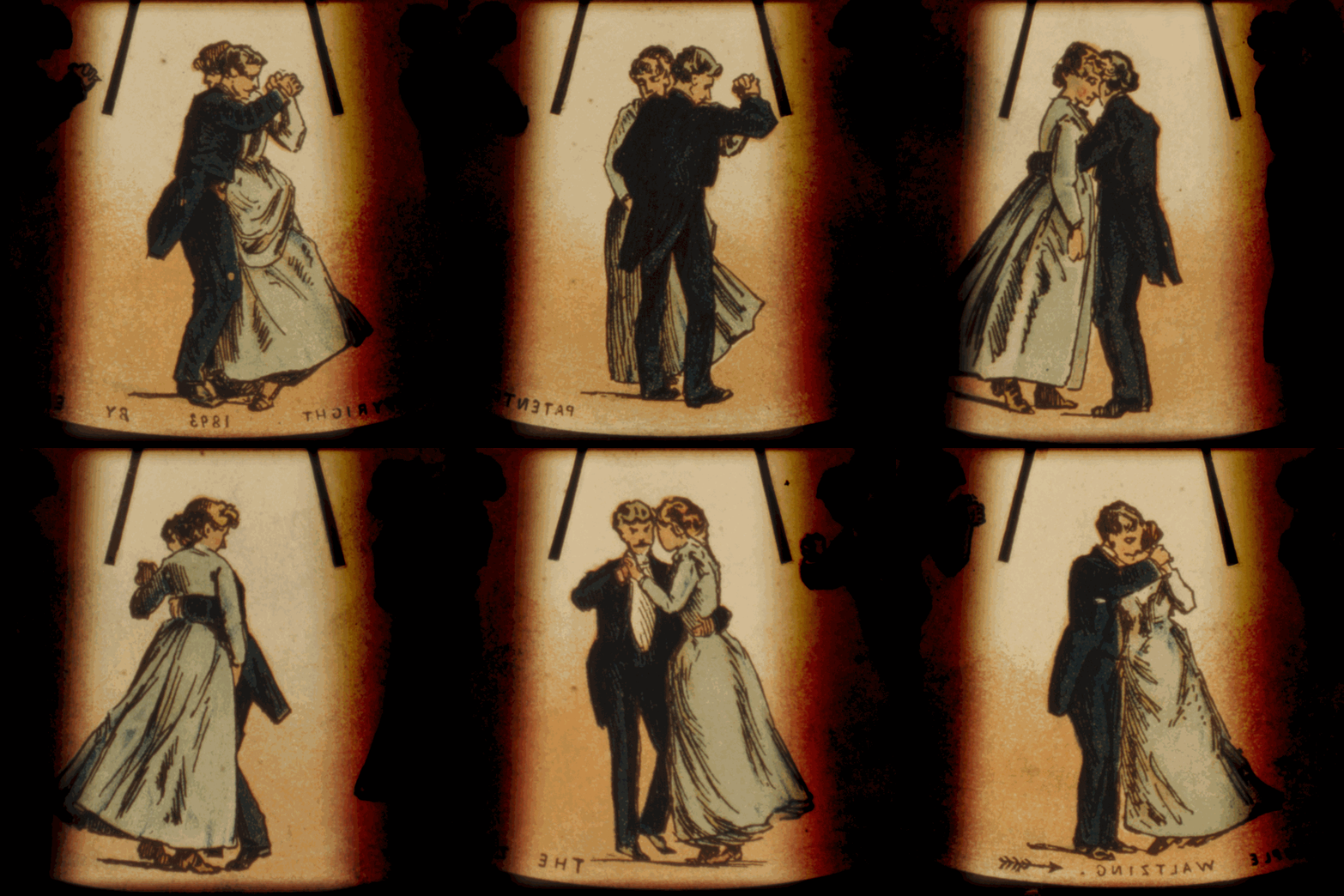
The phenakitoscope was a very early animation device that employed the use of a disk that spun round with a sequence images on it again it used the persistence of vision principle to trick the eye into watching the images come to life, a famous example of one of the first phenakitoscopes was created Edweard Muybridge created in 1893 it showed a couple dancing the waltz.
The first Phenakistoscope was invented in 1841 by the Belgian Joseph Plateau who was the first person to demonstrate the illusion of a moving image. with the Phenakistoscope. Terry Gilliam is an outstanding cut out artist he started his career as a strip cartoonist but soon moved onto animating for the Pythons, here is a video showing Terry explain and give examples of how he utilized and mainstreamed cut out animation.
The Praxinoscope was another early animation device known as the successor to the Zoetrope it was invented in 1877 by the French inventor Charles-Emile Reynaud similar to the Zoetrope it used a 'strip' of images placed around the inner cylinder that when spun round you can see the animation The Praxinoscope improved on the Zoetrope by replacing its narrow viewing slits with an inner circle of mirrors, placed so that the reflections of the pictures appeared more or less stationary in position as the wheel turned.
The Zoopraxiscope is another early animation device that was considered the first movie projector, it PROJECTED images from a rotating glass disk that rapidly spun this again would trick the eye into seeing a moving sequence/ animation, Initially the images were painted onto glass as silhouettes later on outlined drawings that were printed on disc then coloured by hand some of the animated sequences were extremely complex the device has been named as the inspiration behind Eddison's Kinetoscope.
Genres Within Animation
Cinema
Top Cat The Movie: Released in 2011 is a Mexican/Argentine film based on the Hannah Babera character Top Cat the film employed the use of flash animation to make the film, It Made $14,714,672 at the box office It was largely panned from critics and fans alike but still made records within Mexico as one of the biggest openings in the history of the Mexican film industry grossing $43,536,074 pesos on its first weekend.
Advertising
Animation has been effectively used as a marketing strategy for advertising because it is not bound by the laws that others are bound by for example an animated can seem less 'cheesy' when employing special effects because the special effects look just like the advert itself, animated adverts can also use the huge range of colors available to really grab the audience whether child or adult. Here is perhaps on of everyone's favorite adverts:
Children's Television
Children's Television is jam packed full of different animated series (or cartoons) these cartoons are often colorful and cheery, this is because the target audience is generally under the age of 14 here is an example of a famous children's TV animated sequence
Computer Games
Animation in video games is basically 99% of the game (setting aside the mechanics of the game) but this animation is different than what you would find in a movie or TV series this is because the animation HAS to be immersive the animation is seen from so many different angles in a video game (first/third person perspective) the animation has to look pristine and perfect or else it won't be a good game.
Possible Themes
I think that in the future I will use some of themes I have discussed in this, in some of my future animated projects for example a animated sequence that was inspired by some of the great pioneers, also I may look into digitized cut out animation in homage to the styles of Terry Gilliam his brand of lavish and black comedy inspires me to also create some animated sequences just like it.

No comments:
Post a Comment