Friday, 12 June 2015

Evaluation

Q1. What Do You Feel about the work you produced?

A. I feel glad that I stuck to the idea when making the work as I had difficulty using the software, and I'm glad that the mapped out idea that came from the idea generation part of the assignment was displayed albeit simplistic. However I feel that the production of the animation in flash was extremely rushed as it took only 1 hour to animate, this is reflected in the simplistic flow of it and the overall duration of the work, I also feel that the work reflects my ability to animate as I know I rushed the production and I also know that the character designs were poor.

Here is a screen grab of the character designs that were used in the final piece, as you can see the poor quality of them reflects the rushed speed at which it was produced.

In conclusion I am disappointed in the work I produced, had I taken the time and the right amount of care I could of produced a lot better work so because of the speed of the production it was downright bad, and needs major improvement.


Q2. What is the audience feedback like?

A.


Here I agree with the criticism that the character movement was poor and could of been done a lot better, had I taken the right amount of time and consideration while producing it, it would of looked better.
I also agree that animating the legs separately to give the illusion of the character walking would of improved the overall flow and fluidity of the animation. I appreciate that the use of sound within the animation was sought as effective.


Again I agree with the fact that the overall production was downgraded by the use of simple animation for the movement of the characters legs, However I also think that the sound was effective

Q3. How Could You Improve?

I could obviously improve my work by actually taking the time to slowly animate the legs individually, this could of actually boosted my overall grade for the work, it would of also improved the animation tenfold as it would of flowed much smoother and the movement would of been fluid.
I also could of improved my work by setting out a tight schedule for working on the animation, this would of avoided putting harder thought into other assignments and not doing this one, as a result the work I could of produced would of been better.

Q4 Will you make these improvements?

No I will not be making these improvements to the animation, this is because  actually still have lots of assignment work to be done, however I will take the feedback into account next time I am attempting to make an animation either for an assignment of in my own free time.

Friday, 22 May 2015

Making a 2D Animation

Intro
I am going to be making a 2D animation sequence, some of the themes that it will have are as follows: Black Comedy,Death,Violence,Recreations of movie sequences and other possible pop culture references. The sequence might also contain homage references to other famous animators like Terry Gilliam for example.

Research and Ideas

As seen on my other assignment I can make a graphic image in flash move this means I could make a car or a skateboard or a similar object that you use to move around quickly in flash using the Freehand graphic tool or by having an image of said object and turning it into a graphic I can then follow the same steps to make it move across the screen here is a screen shot from my other assignment that shows my own work.
I could also use the shape tween tool to make and animated sequence I have used this tool before and have exampled my work in the first assignment, it showed how to make a sequence using a shape tween. Here is the finished version of the shape tween in gif form:
My research in the first animation led to a trailer for the animated Batman adventures this type of show is inspirational as it contains the dark themes and violence that I might use for my idea (obviously the show was targeted for kids whereas mine will be more focused towards adult themes like murder,violence,drugs etc) however the fluid movements of the sequence is a great guide for animated violent sequences.


Idea 1
For my first idea I thought that a homage or a recreation of a famous movie scene/ TV scene this would save time in think of an original idea but it would a lot harder in recreating the sequence in flash this would also depend on the complexity of the scene in question, the scene could also be black comedy inspired (IE jokes about death) this again would be a recreation of a TV/Movie scene.
I thought  of this idea because when researching the history of animation I watched different film and movie scenes that contained animation, it got me thinking of watching other live action films in an animated sequence, so I watched some of my favorite films as 'research'. For example the shootout scene in Reservoir Dogs is one of my favorite movie scenes and could be recreated easily by taking cutouts of the characters in the scene and making their mouths move and adding the audio from the scene here is the scene in question, the actual flash part would be the initial 10 sec build up then 10 secs of shooting and falling to the ground. 
Idea 2
This idea is a lot simpler than the first idea it is a simple but effective I thought would tell a short story about a man walking his dog and the things he sees in a  20 sec period this animation would be full of color and bright imagery as he experiences his walk ( this could be overlapped by suggestions he is actually tripping on LSD) the world will then morph into horrible imagery and scary things, he is shown crying and being scared, the animation cuts to him on his sofa drooling and dying this idea was created when I watched the film 'Scarface' the drug addiction that slowly brings him down led me to an idea that showed how dark and horrible drugs can be. To be funny and slightly lighthearted I will do this to the track 'Lucy in the Sky With Diamonds' a popular song by the Beatles that was about tripping of LSD and general drug taking I also will use this flash animation as a good drug deterrent as it shows the extremities that people go to while under the influence of drugs. I think this animation will be great for the selected target audience who are people aged 17-21, this selection of people is most likely to be curious about drugs.

The story has since been changed to the character running into a monster and fleeing (DUE TO TIME CONSTRAINTS)

Characters for Idea 

Jim-the main protagonist-Stick figure-Divorced his wife took everything from him. Lives in a small shitty apartment

Various Creatures- Things Jim sees when tripping they torment Jim (inner daemons)


One of Jim's monsters (inner demons)it takes the form of a bull with razor
 sharp teeth


Jim 2: 


Background


Jim's Mind Forest:


Here I have started my animation, I have added a key frame to the time line and a classic tween to make it look like the character is moving into frame. 


I have also added a classic tween to another layer, on this layer the monster comes into frame quickly, and will roar. 

The character will scream and turn and run away (all sound effects and titles will be added post) this was achieved by creating a copy of the character and flipping it. 


Then he runs off stage and the monster sits there brooding 

Then it ends 

I have now finished the post production and will upload the finished project to blackboard


Friday, 6 February 2015

2-D Animation Assignment

One of the  many traditional animation types is Cel animation, in Cel animation the characters are generally drawn on cels and then laid over a  static background drawing that would of been painted on, cel animation was widely used because it saved on labor by allowing studios to split up production of a animation into different teams of people this 'assembly line' process allowed production of animated films much more quickly.
Painting with an acrylic paint on the reverse side of an already drawn cel
Another traditional 2D animation Technique is Rotoscoping, this technique was widely used in early animation films the animators trace over footage frame by frame originally live actions films were projected into a frost glass panel then redrawn, the projection equipment is the actual device called the rotoscope this invention was inevitably replaced by the invention of computers.
Cutout animation is the technique of producing animations using flat props and characters these are all created by cutting out paper,card or fabrics the earliest known animated film was created cutout animation it is also known as the worlds earliest surviving animation technique obviously cutout animation is all done on computers in modern times using scanned images or vector graphics a notable example of modern time cutout animation is South Park. On the right is a video link to the animated short 'Killer Cars' made by Terry Gilliam arguably one of the best cut out animators still alive.
Flip Book animation is an animation technique that first appeared in 1886, it works by having a series of pictures that vary gradually to create a sequence when rapidly flipped they are known as a 'primitive' form of animation like motion pictures they heavily rely on persistence of vision.

2-D Animation Techniques 

Shape Tween:


Flash Rocket:


Development of 2-D animation techniques
Animations earliest attempts were pioneering for the early media industry as they provided millions upon millions of hours of entertainment for early audiences. There are many pioneers of animation an example of one these pioneers is the Hanna Barbera company. It was formed in 1957 by former MGM  William Hanna and Joseph Barbera, the company is most famous for its long running cartoons like Tom and Jerry, Scooby Doo and The Smurfs they have collectively won eight Emmy awards a Golden globe and a star on the Hollywood walk of fame. Above is a video of how Hanna Barbera made their cartoons they mainly used Cel animation to create all of their works this video has a description that the different jobs there was and different roles that had to be undertaken in making a Hanna Barbera cartoon. Besides their cartoons and characters, Hanna-Barbera was also noted for their large library of sound effects. Besides cartoon-style sound effects such as ricochets, slide whistles and more,they also had familiar sounds used for transportation, household items, the elements, and more. When Hanna and Barbera started their own cartoon studio in 1957, they created a handful of sound effects, and had limited choices.
The Zoetrope is a device that produces the illusion of motion by displaying a sequence of drawings or photographs showing progressive phases of that motion. The Zoetrope is made out of a cylinder that has vertical slits, on the the inside of it there is a 'band' which has several slightly different images on it,the cylinder spins round and as you look through the slits The scanning of the slits keeps the pictures from simply blurring together, and the user sees a rapid succession of images, producing the illusion of motion. Although they are a early example of simple animation they are still used and referenced in modern culture for example in the film 'House On Haunted Hill'(1999 remake) there is a man sized Zoetrope used as a horror tool also Artist Scott Blake created a Zoetrope that let viewers relive the events of 9/11 although morbid it is still an example of a modern Zoetrope in action.

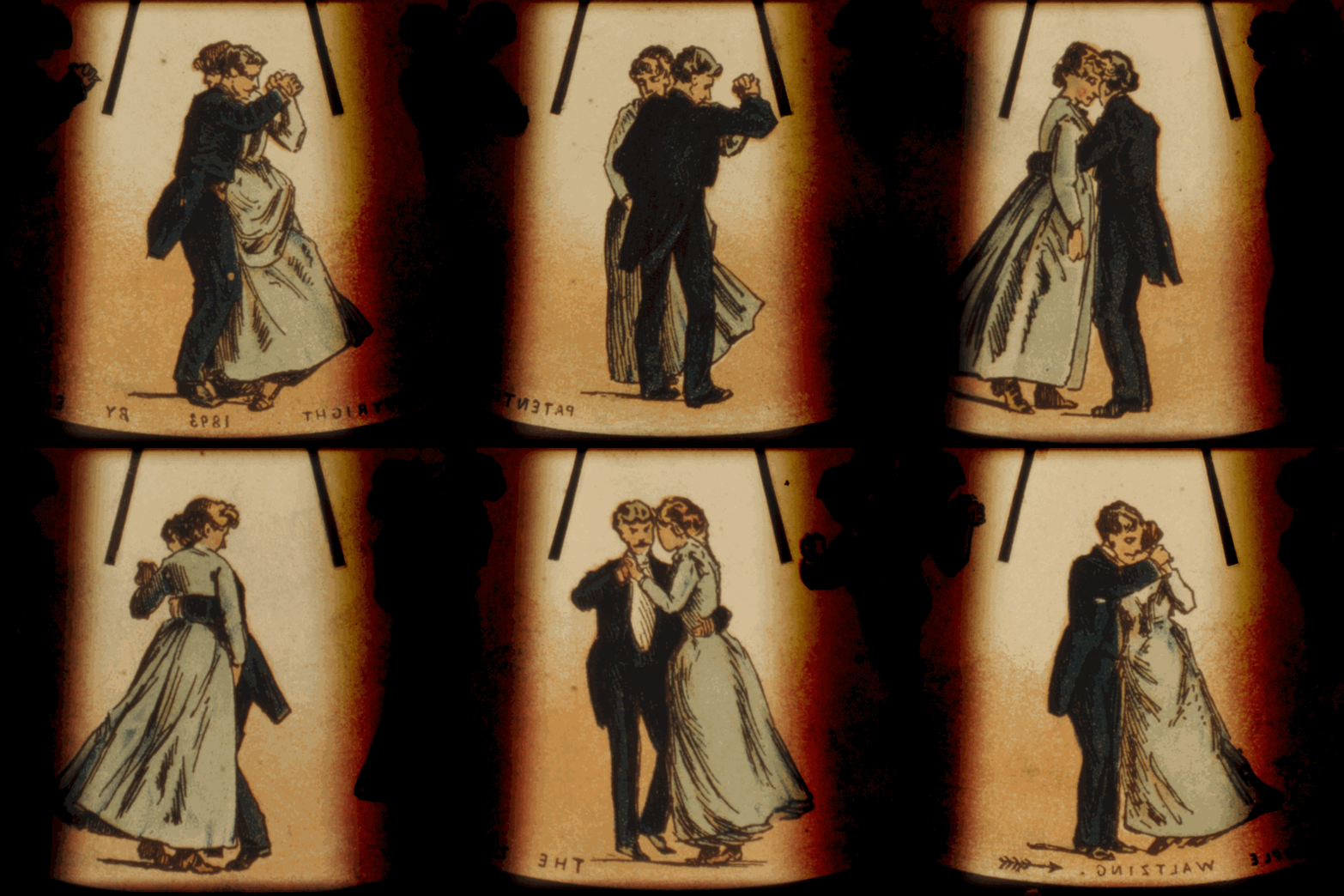
The phenakitoscope was a very early animation device that employed the use of a disk that spun round with a sequence images on it again it used the persistence of vision principle to trick the eye into watching the images come to life, a famous example of one of the first phenakitoscopes was created Edweard Muybridge created in 1893 it showed a couple dancing the waltz.
The first Phenakistoscope was invented in 1841 by the Belgian Joseph Plateau who was the first person to demonstrate the illusion of a moving image. with the Phenakistoscope. Terry Gilliam is an outstanding cut out artist he started his career as a strip cartoonist but soon moved onto animating for the Pythons, here is a video showing Terry explain and give examples of how he utilized and mainstreamed cut out animation.


The Praxinoscope was another early animation device known as the successor to the Zoetrope it was invented in 1877 by the French inventor Charles-Emile Reynaud similar to the Zoetrope it used a 'strip' of images placed around the inner cylinder that when spun round you can see the animation  The Praxinoscope improved on the Zoetrope by replacing its narrow viewing slits with an inner circle of mirrors, placed so that the reflections of the pictures appeared more or less stationary in position as the wheel turned.

The Zoopraxiscope is another early animation device that was considered the first movie projector, it PROJECTED images from a rotating glass disk that rapidly spun this again would trick the eye into seeing a moving sequence/ animation, Initially the images were painted onto glass as silhouettes later on outlined drawings that were printed on disc then coloured by hand some of the animated sequences were extremely complex the device has been named as the inspiration behind Eddison's Kinetoscope.

Genres Within Animation

Cinema 

Top Cat The Movie: Released in 2011 is a Mexican/Argentine film based on the Hannah Babera character Top Cat the film employed the use of flash animation to make the film, It Made $14,714,672 at the box office It was largely panned from critics and fans alike but still made records within Mexico as one of the biggest openings in the history of the Mexican film industry grossing  $43,536,074 pesos on its first weekend.

Advertising


Animation has been effectively used as a marketing strategy for advertising because it is not bound by the laws that others are bound by for example an animated can seem less 'cheesy' when employing special effects because the special effects look just like the advert itself, animated adverts can also use the huge range of colors available to really grab the audience whether child or adult. Here is perhaps on of everyone's favorite adverts: 


Obviously they do not have a trained Meerkat talking... That would be mental, they employ different animation techniques to create a lovable realistic Meerkat to advertise insurance comparing.

Children's Television 

Children's Television is jam packed full of different animated series (or cartoons) these cartoons are often colorful and cheery, this is because the target audience is generally under the age of 14 here is an example of a famous children's TV animated sequence  


Music Videos


A wide range of artists use animation to tell the story of their song in a music video the most well known animated music video comes from the band 'Gorillaz'  the music video contains the animated avatars that the band uses to represent them (this song also feats another artist who can be seen in live action) the music video looks quite nice animated you can see the blades of grass waving in the wind the attention to detail is quite well played in an all round good music video.


Computer Games

Animation in video games is basically 99% of the game (setting aside the mechanics of the game) but this animation is different than what you would find in a movie or TV series this is because the animation HAS to be immersive the animation is seen from so many different angles in a video game (first/third person perspective) the animation has to look pristine and perfect or else it won't be a good game.

Possible Themes

I think that in the future I will use some of themes I have discussed in this, in some of my future animated projects for example a animated sequence that was inspired by some of the great pioneers, also I may look into digitized cut out animation in homage to the styles of Terry Gilliam his brand of lavish and black comedy inspires me to also create some animated sequences just like it.